Exploring Victoria’s High Country through sound, taste and touch
Five blind and low-vision travellers visited Victoria’s High Country with Cocky Guides last weekend, taking part in a four-day sensory tour designed to show how inclusive tourism can engage sound, texture, aroma and taste — not just sight.
Last weekend, accessible tourism operator Cocky Guides brought five blind and low-vision travellers and two guide dogs to Victoria’s High Country for a four-day sensory experience designed to show that travel is not defined by sight alone.
Delivered in collaboration with Tourism North East, the visit focused on engaging sound, texture, aroma and taste — demonstrating that accessibility in tourism is often about experience design, not expensive infrastructure.
For people living with disability and their families, planning a holiday can involve extra layers of uncertainty. What will access be like? Will staff understand? Will the experience feel inclusive or awkward? The High Country visit aimed to answer those questions with action.
“Blind and low-vision travellers don’t experience less — we understand that we can deliver experiences at destinations differently,” said Cocky Guides founder James “Buck” McFarlane.
“Destinations like the High Country are naturally sensory. You can hear the landscape, smell the bush, feel the trail surface and taste local produce. We are excited to visit the region for the first time with our travellers and show businesses how accessible and inclusive they already are”
A wine tasting designed around the senses
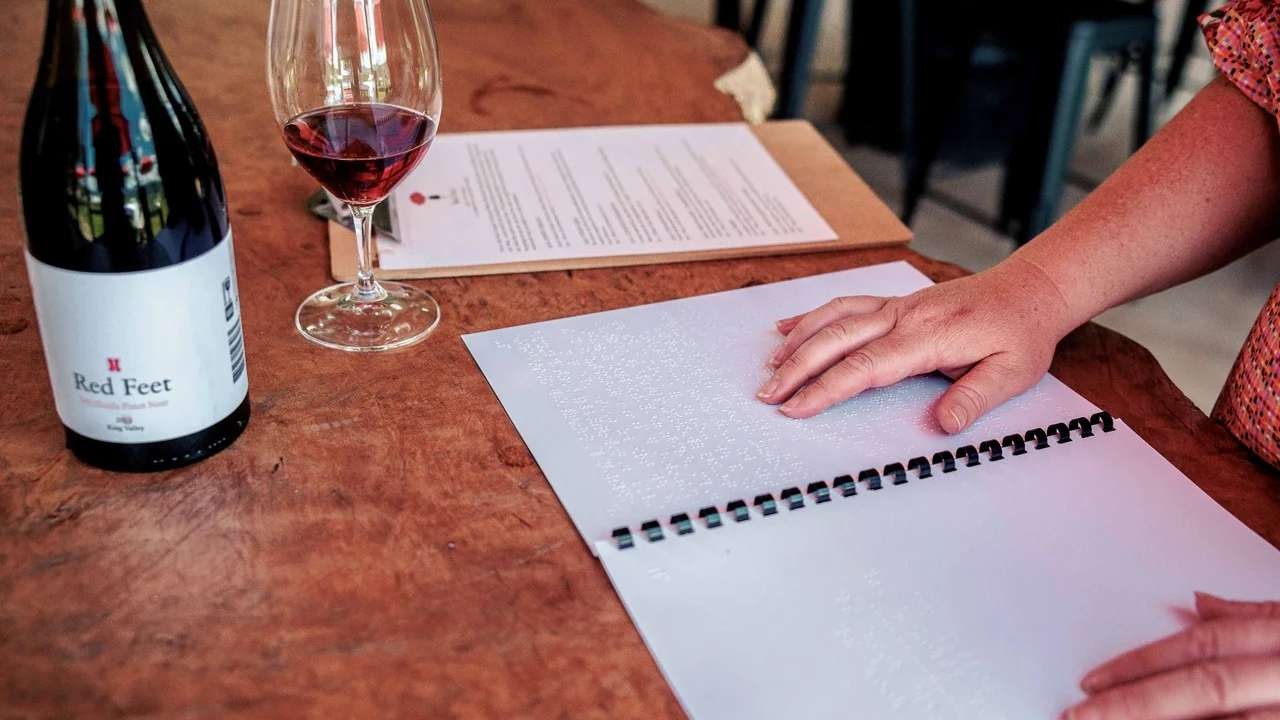
A centrepiece of the weekend was an accessible event at Red Feet Wines in the King Valley: A Taste of the Senses: A Wine Sensory Journey of the King Valley.
Created by owner Megan Star with support from Tourism North East and Vision Australia, the experience placed touch, aroma and sound at the heart of wine appreciation.
Guests explored three wines paired with small dishes, while physically interacting with grape skins, oak and soil types. The environment incorporated tactile wayfinding, anti-glare settings, professional orientation and mobility support, and braille and large-print materials.
“Wine has always been sensory — we’re simply removing the visual barrier,” said Megan. “When people slow down and focus on smell, texture and flavour, they connect more deeply with the wine and the place it comes from.”
Experiencing the High Country differently
Based in Mansfield, the group extended the sensory approach across the region, including:
- walking the Mansfield Rail Trail and feeling the changing trail surfaces
- experiencing botanical gardens through scent and texture
- visiting local food producers and tasting regional flavours
- exploring distilleries, breweries and wineries through guided sensory descriptions
Tourism North East chief executive Gina Elliott said the visit highlights how naturally inclusive regional experiences can be.
“Many operators are already inclusive without realising it,” she said. “A few thoughtful adjustments can turn a good experience into one that’s genuinely welcoming and memorable.”
What this means for travellers
Australia’s accessible tourism market includes more than 4.4 million people when travellers with a disability, seniors and companions are considered. For families, that represents not just a market statistic, but a reminder that inclusive travel is both needed and possible.
“Inclusive tourism doesn’t mean special treatment,” Buck said. “It means inviting people to experience a place in ways they may never have considered before.”
For people living with disability and their families, the message from the High Country is clear: sometimes the most memorable travel experiences are not about what you see, but what you sense.